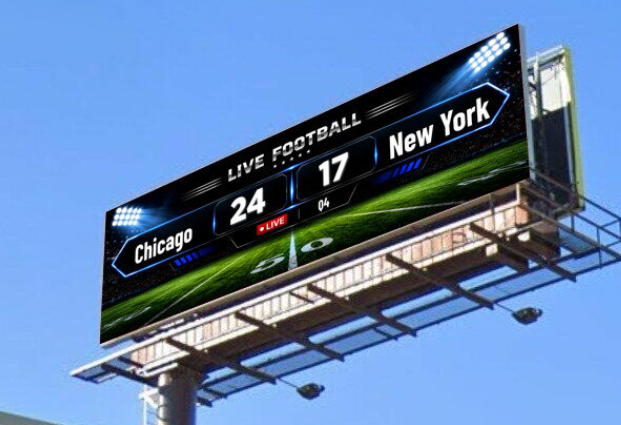
Using AI to Generate Dynamic Campaign Ideas

Your next dynamic campaign idea may be one prompt away.
ChatGPT, Gemini and other large language models can help your sales and creative teams brainstorm practical ways to use dynamic content in digital out-of-home campaigns.
Give the AI a few details about your client, market and campaign—and ask it to develop concepts
Step 1: Copy and paste this exact prompt
Open ChatGPT or Gemini, copy the full prompt below, replace the information in brackets, and submit the following:
I am an Account Executive for an out-of-home advertising company. We use Lucit to create dynamic campaigns for digital billboards and digital signage.
Client information:
Client name: [CLIENT NAME]
Primary location or market: [CITY, STATE]
Client website: [WEBSITE, IF AVAILABLE]
Industry: [INDUSTRY, IF KNOWN]
Campaign period: [DATES OR TIMEFRAME]
Business objective: [OBJECTIVE, OR “NOT YET DEFINED”]
Research the client, its products or services, its target customers, the local market, and relevant events, seasons, holidays or business opportunities during the campaign period.
Review all of the relevant Lucit documentation at https:/lucit.app/docs and recommend ideas that make meaningful use of Lucit’s dynamic creative capabilities.
Create 10 distinct campaign concepts that an account executive could present to the client.
For each concept, provide:
Campaign name
Business objective
Target audience
Dynamic concept and how the billboard or signage changes
Data required, such as weather, time, location, inventory, pricing, events, sports results, APIs or spreadsheets
Lucit capability that could be used
Example billboard headline of approximately seven words or fewer
Suggested call to action
Best timing within the campaign period
Why the idea is relevant to this client and market
Implementation complexity: Simple, Moderate or Advanced
Information that must be confirmed with the client
Present the results in a table.
After the table, include a section titled “Top Three Recommendations” explaining which three concepts are strongest and why.
Keep the ideas practical for digital out-of-home advertising. Prioritize messages that can be understood within a few seconds.
Do not claim that the client offers a product, service, price, promotion or capability unless a reliable source confirms it.
Cite current public sources used for client, market, event and seasonal research. Clearly label assumptions.
When a concept may require a custom integration or a data source whose availability is uncertain, mark it as “Requires Lucit confirmation.”
Using the exact prompt above with your replacements, you should have a nice list of options to work from
Step 2: Review and Iterate
Review the generated concepts, select the strongest options and refine them with your client.
Before presenting or launching an idea, remember to verify:
Client products, prices, promotions and claims
Availability and legal use of required data
Compatibility with Lucit capabilities
Local advertising requirements
Billboard readability at a glance
AI-generated concepts should be treated as a starting point—not a finished campaign. Human review is always required.
For more prompt templates, concept-art instructions and guidance for using AI with Lucit, read the complete guide:
Using ChatGPT or Gemini for Dynamic Creative Ideas
Turn a simple client brief into your next great dynamic campaign.